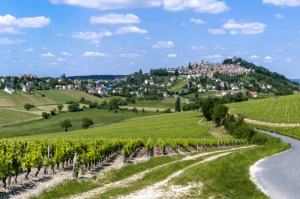

What Does the Term Kabinett Wine Mean?
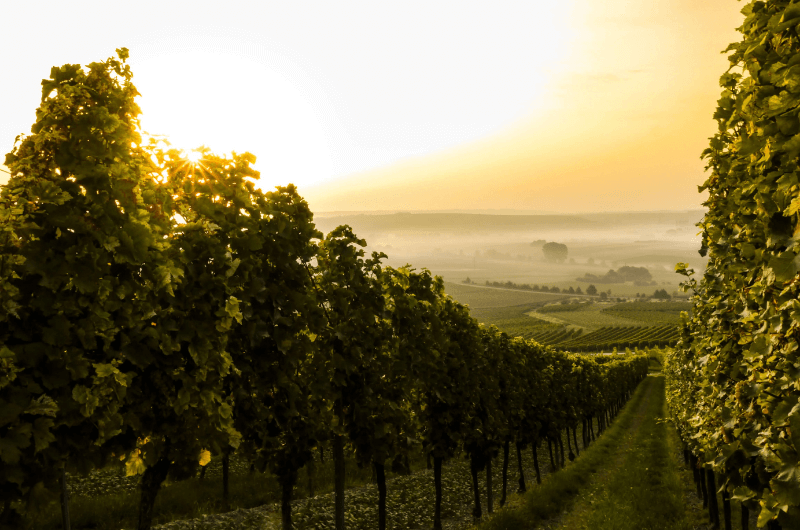
Dry and light. That is Kabinett wine, which ranks among quality wines with predicate—the highest category of wines. What goes into crafting it, how do you recognize a Kabinett wine, and which dishes should you pair it with?
What Is Kabinett Wine?
Kabinett wine is dry and lighter in style. It is usually not sweet, because during fermentation, all the sugar is converted into alcohol. Although there are exceptions, whether the resulting wine will be sweet or dry depends on the winemaker. They decide how much residual sugar remains in the Kabinett.
A Kabinett wine must meet these criteria:
- The sugar content at harvest must be at least 19° NM.
- It is made from grape mash, whole grapes, or grape must.
- It may be made from a maximum of three grape varieties.
- If one variety accounts for 85% of the must, the wine can be labeled under that single grape variety.
- The grapes must come from a single wine region.
- No chaptalization or chemical stabilization is permitted.
Kabinet wines rank among quality wines with special attributes, yet you will rarely come across them on the Czech market. This is partly because winemakers often prefer to label their bottles simply as country wines (zemské víno). The reason is straightforward: official categorization takes a great deal of time and money, making it unprofitable for small boutique wineries.
Quality wines with special attributes belong to the highest echelon of wine classification, which is determined by grape sugar content—in other words, the ripeness of the grapes. You could say that the higher the natural sugar content, the better the quality. Just be sure not to confuse this with residual sugar. While grape sugar content is evaluated directly in the harvested grapes, residual sugar is measured in the finished wine. The level of residual sugar is what ultimately dictates how sweet the resulting wine will taste.
What categories of attribute wines exist?
Wines with special attributes are divided into distinct categories based on grape sugar content. Riper grapes naturally tend to have a higher sugar concentration—measured in degrees NM (°NM) per 100 liters of grape must. One degree NM represents one kilogram of natural sugar in 100 liters of grape must. Based on this measurement, wines are classified into the following categories:
- wine (formerly table wine) – 10 °NM
- country wine (land wine) – 14 °NM
- quality wine: varietal – 15 °NM, branded – 15 °NM
- wine of original certification (VOC) – 15 °NM
- quality wine with special attributes, which is further divided into:
- kabinetní víno (Kabinet) – 19 °NM
- Late harvest – 21 °NM
- Selection Of Grapes – 24 °NM
- berry selection – 27 °NM
- ice wine – 27 °NM
- straw wine – 27 °NM
- selection of botrytized grapes – 32 °NM
If you’d like to learn more about quality wines with special attributes, read our article Quality Wine with Attributes: Wine Classification by Sugar Content.

What Food Pairs Best with Kabinett?
Serve Kabinett wine alongside lighter dishes. Kabinett can be either white or red. Pair white Kabinett with fish, poultry, and delicate cheeses. Red Kabinett truly shines when accompanied by dark meats and hard cheeses.
Discover which wine to pour with various dishes in our guide Serving Wine: The Perfect Pairings for Fish and Goose.
Select wines. In your email.
once every month. You can look forward to our recommendations, interesting content, and great offers for your archive.
By sending an email you agree to the Terms and Conditions for Protection of Personal Data